The-Hidden-Costs-of-Manual-Print-Operations

5 The Hidden Costs of Manual Print Operations – How PrintPoz Reduces Time, Errors & Confusion

The hidden costs of manual print operations affect print businesses far more than most owners realise. Many print shops still manage daily orders through WhatsApp messages, phone calls, spreadsheets, and scattered files. At first this feels like a normal way to work, but over time it creates confusion, missed details, and lost revenue that quietly builds up.

According to widely accepted process management principles, organisations that centralise workflows and standardise operations are able to reduce errors and improve efficiency. This is especially important for print businesses where multiple custom orders, files, and customer instructions need to be managed every day

Manual processes drain valuable staff time and make mistakes easier to happen. Teams often spend hours searching for customer instructions, scrolling through old messages, and rechecking details that should already be clear and simple. When order information is scattered in different places, it becomes hard to see the real status of a job, and customers end up waiting longer than they should. What looks like a small delay on one order slowly turns into a daily habit across the business.

PrintPoz helps print businesses move away from this daily struggle by bringing everything into one organised system. Every order, file, note, and update stays in a single place, making work simpler and faster. Instead of chasing information, teams can focus on production and customer service with confidence. The entire workflow starts to feel calm rather than chaotic. These Hidden Costs of Manual Print Operations often remain unnoticed at first, but they slowly impact efficiency, customer satisfaction, and long-term business growth.


For many print businesses, the Hidden Costs of Manual Print Operations are not visible on invoices or balance sheets. They quietly appear as delayed jobs, repeated clarifications, stressed teams, and customers who lose confidence over time. These operational gaps often go unnoticed until they start affecting profitability and growth

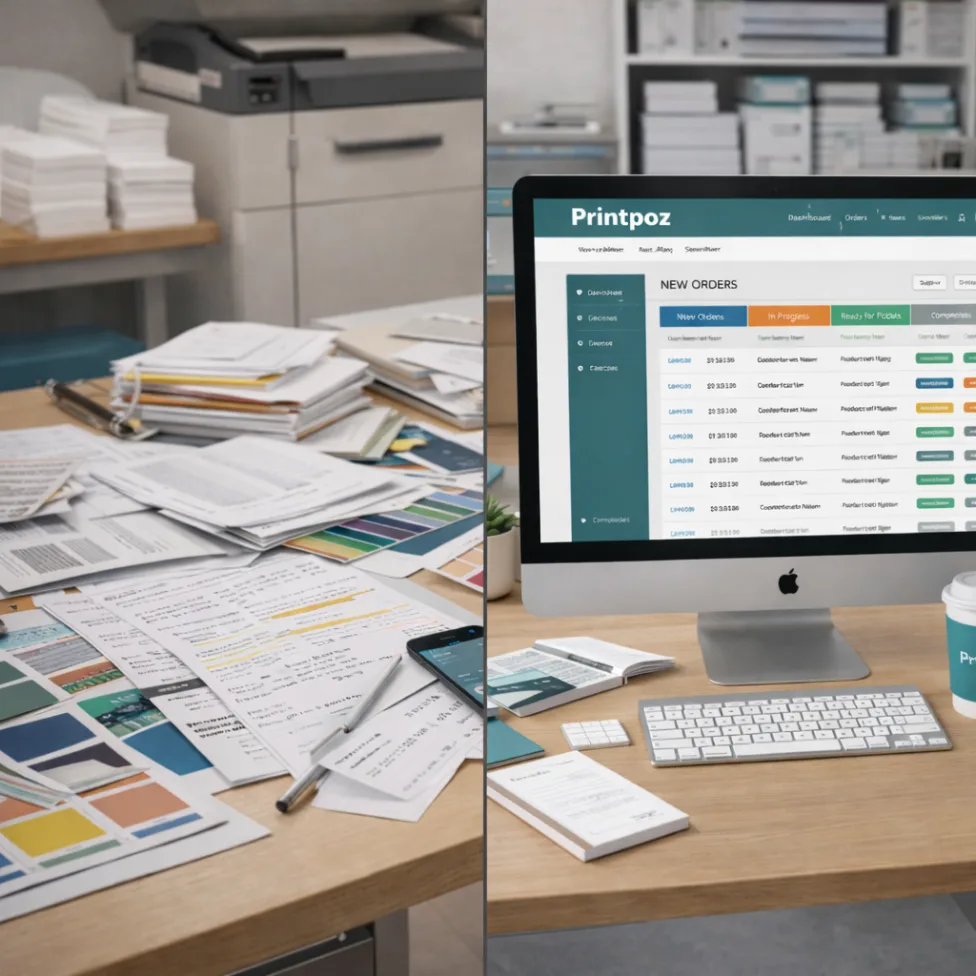
Hidden Costs of Manual Print Operations reduced with a structured digital order management system

1. Time Lost in Following Up

In manual workflows, teams spend hours every day:

  • Checking messages for order details
  • Asking customers for missing files
  • Confirming design changes
  • Updating order status manually

This time does not generate revenue. It only keeps operations running.

With PrintPoz, all order information stays inside one dashboard. Teams can view details instantly without searching across chats or emails. This reduces unnecessary follow-ups, frees staff time, and speeds up daily work in a natural way.

2. Errors Caused by Scattered Information

When order data lives in different places, mistakes happen:

  • Wrong files get printed
  • Old versions are used
  • Instructions are missed
  • Delivery dates are confused

These errors lead to reprints, delays, and unhappy clients. They also damage the reputation of the print shop even if the team worked hard.

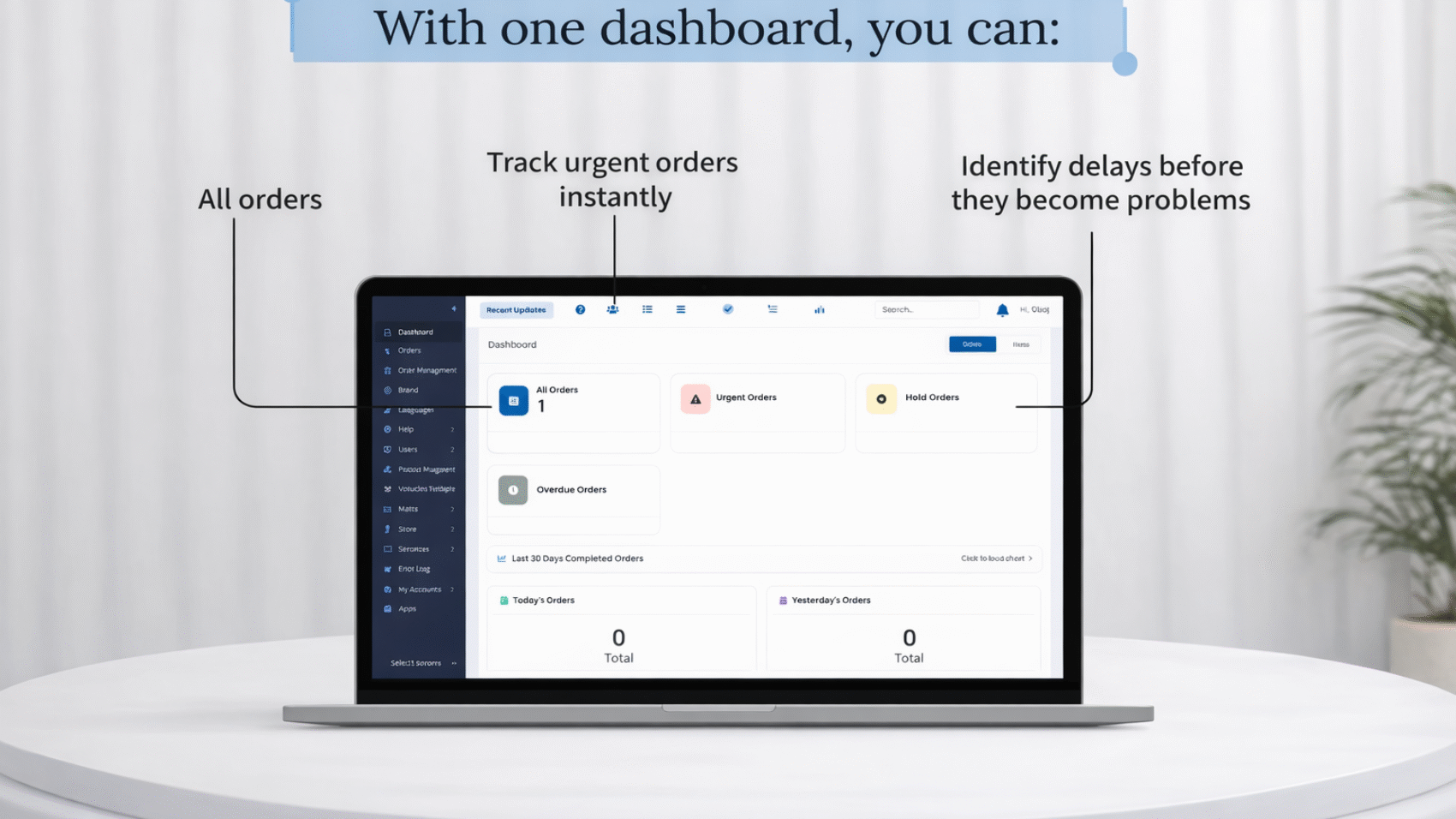
With PrintPoz’s order management dashboard, teams can instantly view every job’s status without searching through chats or spreadsheets.

PrintPoz keeps files, notes, and instructions attached to each order. When the whole team works from the same information, misunderstandings drop and rework becomes far less likely. Everyone sees the same details at the same time.

3. No Clear Order Visibility

Manual operations make it hard to answer simple questions:

  • Which orders are in production?
  • Which are waiting for approval?
  • Which are ready for dispatch?

Without visibility, planning becomes guesswork and priorities get mixed.

PrintPoz Order Management shows every stage clearly – from order confirmation to production and delivery. Teams know exactly what to do next without asking around or disturbing others. This brings real control back into daily work.

4. Customer Communication Becomes a Burden

Customers constantly ask:

  • What’s the status of my order?
  • Did you get my file?
  • When will it be delivered?

Answering these repeatedly slows down staff and interrupts production.

PrintPoz provides automatic order updates so customers can track progress themselves. This reduces support messages, saves time, and builds customer confidence without extra effort from the team.

5. Growth Becomes Difficult

A manual system may work for a few orders, but as volume grows:

When these challenges persist, the Hidden Costs of Manual Print Operations begin to limit a business’s ability to grow confidently. Instead of focusing on expansion, teams spend energy fixing avoidable problems. Over time, this creates operational fatigue and slows long-term progress.

  • Staff workload increases
  • Delays become common
  • Quality becomes inconsistent

What once felt manageable slowly turns stressful, and scaling feels impossible.

Industry platforms like Smart Selection highlight how structured and automated systems help businesses reduce operational friction and manage growth more efficiently.

PrintPoz is designed to handle more orders without adding complexity. The same organised workflow continues even when business grows, so the team can expand with confidence instead of fear.


How PrintPoz Solves the Hidden Costs of Manual Print Operations

Hidden Costs of Manual Print Operations reduced with a structured digital order management system

PrintPoz replaces disconnected processes with:
In many print businesses, the Hidden Costs of Manual Print Operations are not visible in daily reports, but they show up through wasted time, repeated follow-ups, and avoidable mistakes. By replacing disconnected tools with a single structured system, print shops can reduce operational friction and create a more predictable, efficient workflow for both teams and customers.

  • Centralised order dashboard
  • File and instruction management
  • Clear production stages
  • Customer order tracking
  • Structured workflow from order to delivery

This removes the hidden costs of manual print operations and gives businesses real control over their daily workflow. Work becomes predictable instead of reactive.


Addressing the Hidden Costs of Manual Print Operations is not only about efficiency, but also about building consistency and trust. When systems are clear and predictable, both customers and teams experience less friction in everyday operations.


Conclusion

The hidden costs of manual print operations are not just about money – they show up as wasted time, stressed teams, confused customers, and missed chances to grow.

Addressing the Hidden Costs of Manual Print Operations early helps print businesses operate more efficiently, deliver better customer experiences, and grow without unnecessary operational pressure.

PrintPoz helps print businesses:

  • Reduce errors
  • Save daily working hours
  • Organise every order
  • Improve customer communication
  • Scale operations smoothly

Eliminating the Hidden Costs of Manual Print Operations allows print businesses to focus less on daily firefighting and more on delivering consistent quality and building long-term customer trust

Moving from manual methods to PrintPoz is not just a software change – it is a smarter, calmer, and more professional way to run a print business.

Centralised-Order-Management-From-Order-to-Delivery-With-PrintPoz

Better Centralised Order Management: 5 Step From Order to Delivery

Centralised Order Management is becoming essential for print shops that want clear workflows, faster fulfilment, and fewer mistakes. When orders are spread across chats, notes, and spreadsheets, important details get lost and deadlines become harder to manage. PrintPoz solves this problem by keeping every order, update, and file inside one organised system.

For growing print businesses, centralised order management plays a vital role in maintaining accuracy, meeting deadlines, and keeping teams aligned as order volumes increase.

PrintPoz gives print businesses a complete order dashboard where teams can track progress, manage tasks, and keep customers informed – without jumping between tools. Everything stays connected from the moment an order is placed until it reaches the customer.

Print businesses using centralised order management software can improve visibility, reduce errors, and manage growth more efficiently.


A Single Dashboard That Unifies All Elements

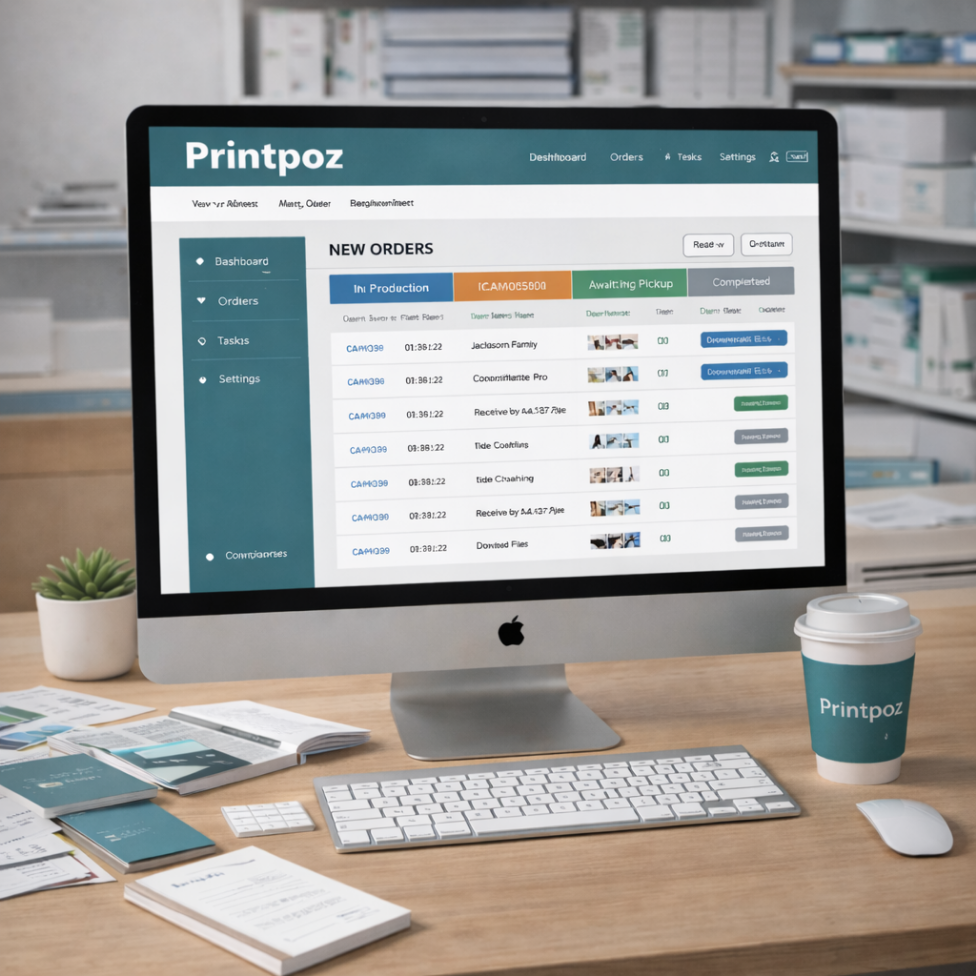
centralised order management for print businesses

PrintPoz features a user-friendly dashboard that displays all orders collectively. Your team no longer needs to sift through messages or multiple applications to locate customer information. All tasks remain neatly arranged within the PrintPoz workspace.

With PrintPoz’s centralised order dashboard, your team can:

  • View all orders in a single list
  • Check progress without asking another teammate
  • Add or update order details
  • Keep files and instructions inside each job
  • Track order status from start to delivery

This level of visibility is only possible through centralised order management, where every task, update, and file remains connected in one system.

This unified perspective minimizes misunderstandings. Guarantees that everyone is aware of the upcoming tasks. When the team is synchronized, processes accelerate and errors are prevented.

A Clear Workflow From Placement to Delivery

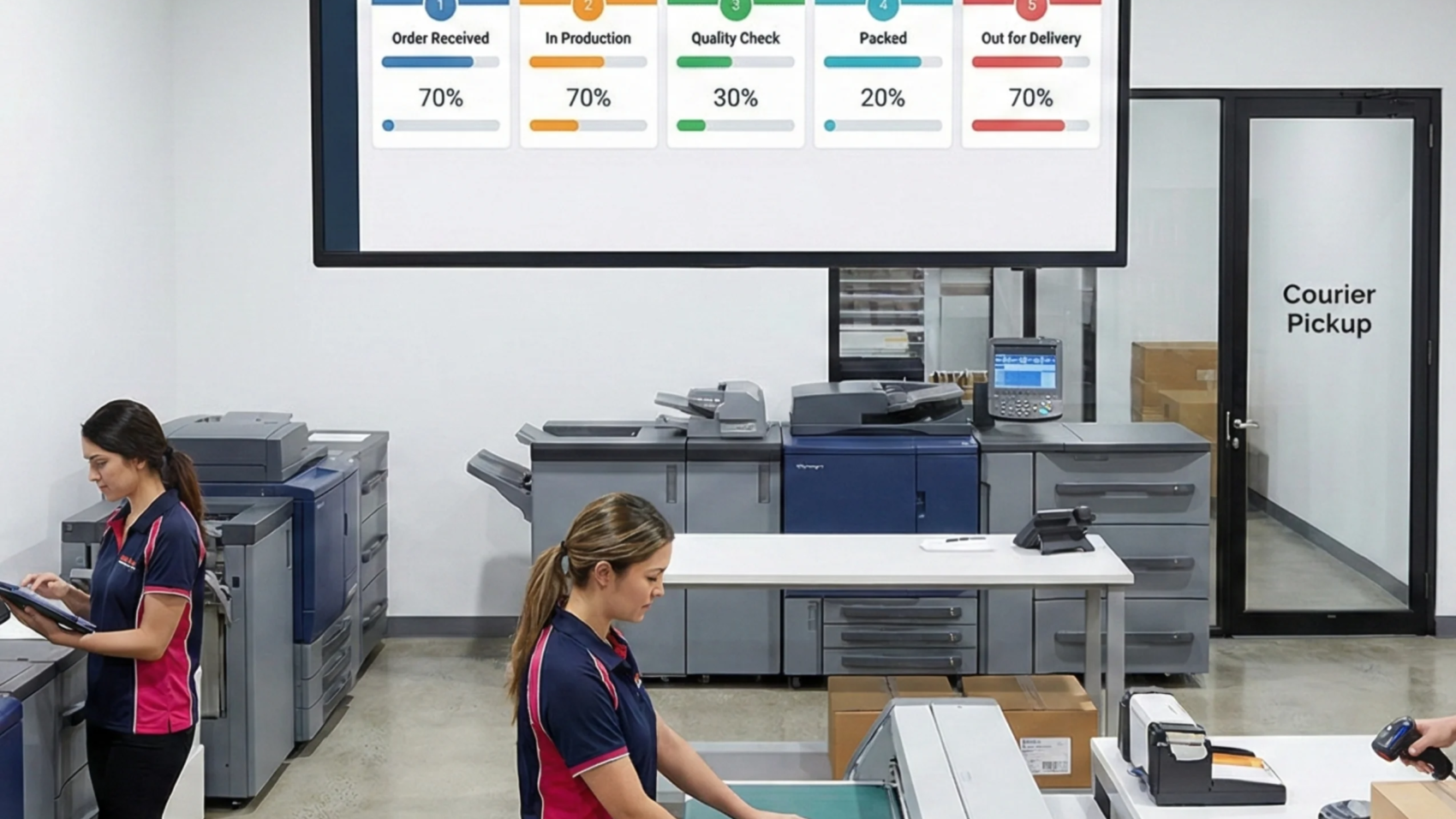
Printing orders typically pass through phases. PrintPoz links these phases ensuring nothing halts during the process. Its order timeline displays the phase each task is undergoing keeping the workflow structured and foreseeable.

A standard PrintPoz process involves:

  • Purchase confirmed
  • Documents. Customized
  • In review
  • In production
  • Ready for dispatch
  • Delivered

When each phase is clearly seen, the appropriate individual understands when to act. This ensures the whole procedure continues efficiently even as order quantities grow.

Real-Time Updates for Customers

Customers value openness. They dislike repeatedly inquiring, “Where is my order?”

With PrintPoz, customers can:

  • See order status changes, in their client dashboard
  • Get alerts when their order advances to the phase
  • Track progress until delivery

This fosters trust and minimizes recurring inquiries. Customers gain assurance by being able to review their order at any time without needing to reach out to the print shop.

Fewer Errors and Faster Turnaround

When order details are scattered in locations the likelihood of mistakes rises—lost notes, overlooked documents or obsolete guidelines. PrintPoz avoids these problems by maintaining all information within an organized system.

PrintPoz assists in minimizing errors by:

  • Centralised file storage
  • Erase order remarks
  • Time-stamped updates
  • A visible order history

When mistakes are minimized your team invests effort in fixing issues and more effort, in fulfilling orders. This results in turnaround and improved print quality.

Built to Scale With Your Print Business

Industry experts explain that well-structured order management systems help businesses reduce delays, improve coordination, and scale operations efficiently.

Platforms such as Quick Calendar Album show how organised print workflows and structured order handling help print businesses manage growing volumes efficiently.

As your printing company expands, handling orders by hand turns overwhelming. PrintPoz’s centralised order management system is designed to scale, enabling you to manage higher order volumes while maintaining full oversight and control.

With PrintPoz, you can:

  • Manage higher order volume easily
  • Keep deadlines under control
  • Maintain workflow clarity even during peak seasons
  • Support more customers without increasing workload

An efficient ordering system supports your business in expanding while preserving the quality of service.


How Centralised Order Management Improves Team Collaboration

Centralised order management also improves collaboration across print teams. When everyone works from the same system, communication gaps are reduced and responsibilities are clearly defined. Team members can see updates instantly, understand priorities, and coordinate tasks without constant back-and-forth. This shared visibility helps print shops operate smoothly, especially when handling multiple orders at the same time.


Conclusion: A Smarter Way to Manage Print Orders

PrintPoz’s Centralised Order Management system streamlines your workflow enhancing clarity, speed and ease of management. Consolidating orders, files, updates and production stages, in a location enables your team to operate more effectively while keeping customers updated at every step.

PrintPoz supports printing businesses:

  • Reduce daily confusion
  • Communicate clearly
  • Prevent mistakes
  • Speed up fulfilment
  • Scale with confidence

Whether you run a small print shop or a growing business, PrintPoz keeps everything organised from order to delivery – simple, reliable, and ready for growth.

Overcoming-Common-Web-to-Print-Implementation-Challenges-A-Strategic-Approach

6 Critical Web-to-Print Implementation Challenges and Strategic Solutions

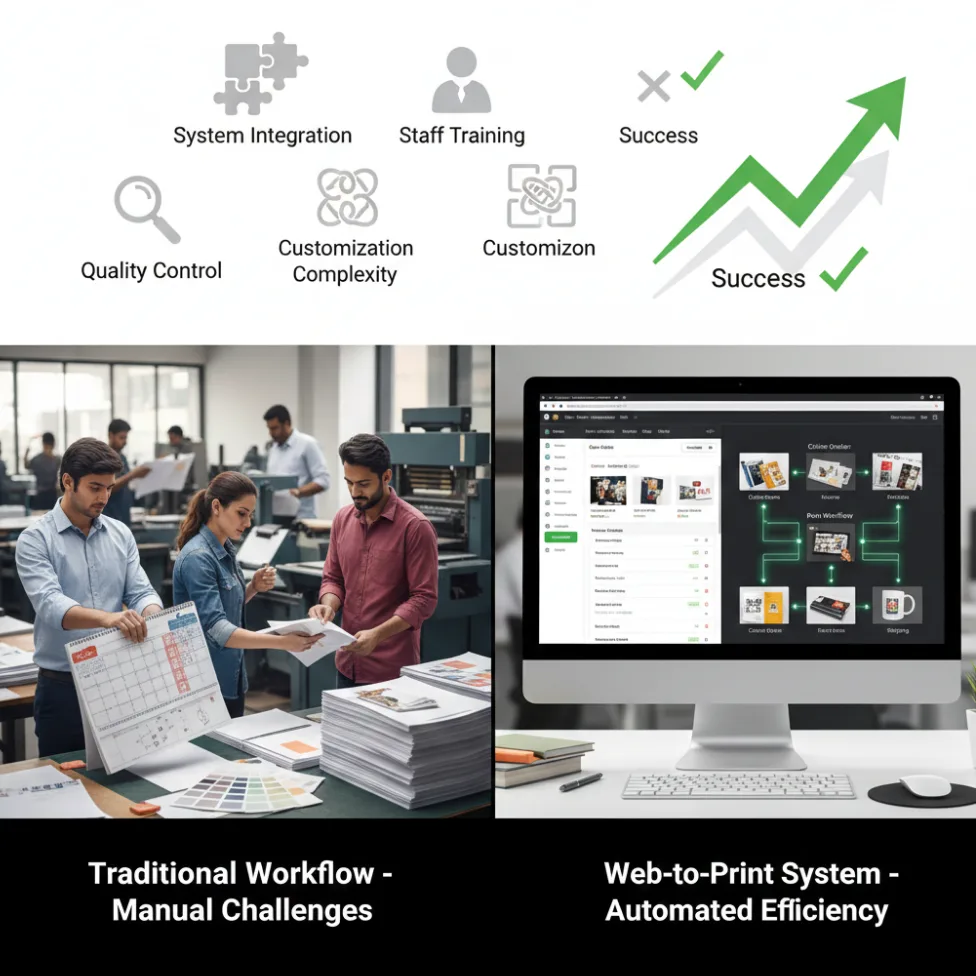
Web-to-print implementation challenges often arise when print businesses transition from traditional workflows to fully digital ordering systems.

Web-to-print implementation challenges are a natural part of any digital transformation in the print industry. As print businesses move from manual workflows to online ordering systems, these web-to-print implementation challenges can impact integration, staff adoption, customization control, and overall ROI. Identifying web-to-print implementation challenges early helps businesses plan smarter rollouts and avoid costly disruptions.

Adopting a web-to-print platform unlocks enormous benefits – from workflow automation to increased order capacity and improved customer convenience. Yet, the journey from traditional printing to a fully integrated online solution isn’t without obstacles. For web-to-print business owners, print shop managers, or anyone considering a digital transformation, understanding and overcoming common hurdles is essential for success.

web-to-print implementation challenges in print business digital transformation

Web-to-Print Implementation Challenges Print Businesses Commonly Face

1. Integration with Existing Systems

Reality check: Legacy systems, such as MIS, accounting, CRM, or manual production schedules, don’t always “play nice” with new web-to-print solutions. Data silos and duplication risks can cause inefficiency and confusion if not managed early.

Example: A mid-sized print shop reported launching web-to-print but struggled with order synchronization because their production and invoicing tools weren’t connected, resulting in lost jobs and frustrated customers.

Actionable tips:

  • Choose web-to-print platforms (like PrintPoz) with proven APIs and flexible integration options.
  • Modern print businesses often rely on modular tools like Quickorders to centralize online orders and reduce dependency on manual data entry during web-to-print implementation.
  • Start with pilot integrations (i.e., orders and inventory) before pushing for complete system integration.
  • Schedule regular data audits during rollout.

2. Staff Training and Change Management

Reality check: Automation triggers worry about job security and resistance to change. Even the best software will fail if staff lack training or buy-in.

Example: A survey in 2025 found that 65% of print businesses cited staff resistance as a top reason for slow technology adoption.

Actionable tips:

  • Involve key staff early – ask for input on workflow changes and feature needs.
  • Provide hands-on training, tutorials, and ongoing support.
  • Show real benefits (reduced repetitive tasks, faster order processing) to boost enthusiasm.

3. Managing Customization Complexity

Reality check: Web-to-print unlocks limitless customization, which is great for customers, but can overwhelm production teams if not streamlined.

Example: Businesses offering too many product variations (+50 templates, unlimited SKUs) experienced bottlenecks in artwork approval and increased errors.

Automation-focused solutions such as PDF Imposer help streamline file preparation, automate imposition workflows, and minimize production errors caused by complex customization.

Actionable tips:

  • Start with a curated selection of the most popular customizable products.
  • Use automation for proofing, file pre-flight, and template management.
  • Leverage PrintPoz’s design tools for error checking and preset options to control customization scope.

4. Cost Overruns and Underestimated Resources

Reality check: Underestimating costs for system setup, integration, training, and ongoing support can threaten project ROI.

Example: A US print franchise underestimated its migration budget by 40% and delayed rollout by six months due to hidden costs in legacy data cleanup and third-party software connections.

Actionable tips:

  • Prepare a detailed implementation roadmap, including all anticipated costs and timelines.
  • Use phased rollouts to validate processes before scaling fully.
  • Budget for post-launch support.

5. Quality Control and Consistency

Reality check: Moving from manual to automated ordering introduces variability in data entry, artwork uploads, and proofing. If not managed, this can impact print quality.

Example: A European printer suffered a spike in reprints after web-to-print launch due to lax file standards and untested templates – cutting into margins.

Actionable tips:

  • Enforce standardized artwork upload specs and automated file checks (resolution, bleed, color).
  • For print businesses handling calendar and album products, platforms like Quick Calendar Album support standardized layouts and automated checks that improve print consistency and reduce costly reprints.
  • Use digital proofs and real-time review tools.
  • Establish routine QA audits, especially post-launch.

6. Customer Adoption and Usability

Reality check: Even the slickest platform can flop if customers find it confusing, slow, or unintuitive.

Tools focused on intelligent product selection, such as Smart Selection, can simplify user choices and improve customer adoption during web-to-print platform rollouts.

Example: Poor onboarding resources led to 30% higher cart abandonment for a major online print provider.

Actionable tips:

  • Choose a web-to-print supplier focused on user experience – PrintPoz offers live previews and help guides.
  • Provide quick-start videos and FAQs.
  • Gather feedback and iterate on your interface for continuous improvement.

Practical Strategies to Overcome Web-to-Print Adoption Issues

  1. Assessment & Planning
    • Map current workflows and pinpoint inefficiencies.
    • Set clear, measurable implementation goals.
    • Identify key team members for a cross-functional “adoption team.”
  2. Set Up & Integration (Pilot Phase)
    • Launch with core products and limited automation to test workflows.
    • Integrate web-to-print orders with inventory and production tracking.
    • Solicit team and customer feedback before full deployment.
  3. Full-Scale Rollout & Monitoring
    • Expand automation to cover artwork approval, proofing, shipping notifications, and CRM.
    • Monitor KPIs such as order turnaround, error rates, and customer satisfaction.
    • Adjust processes and automate more tasks as the team and customers adapt.
  4. Ongoing Optimization
    • Schedule training refreshers and advanced feature workshops.
    • Regularly update products, templates, and integrations based on analytics and feedback.
    • Use PrintPoz analytics to uncover further automation opportunities.

Key Takeaways and Success Checklist

  • Prioritize robust integration and start small – complexity grows over time, but doesn’t need to overwhelm day one.
  • Invest in training and bring your team into the journey.
  • Leverage automation, but maintain quality checks.
  • Simplify the customer experience for higher platform adoption.

Successfully overcoming web-to-print implementation challenges requires a balance of technology, people, and process optimization, ensuring long-term scalability and customer satisfaction.

PrintPoz’s order management, design automation, and workflow tracking help print businesses overcome the common hurdles of digital transformation. From template-driven customization to quality control and detailed analytics, PrintPoz simplifies every stage of overcoming web-to-print implementation challenges.


Primary keyword: web-to-print implementation challenges

Meta title: Web-to-Print Implementation Challenges & Solutions 2025

Meta description: Discover how to solve web-to-print implementation challenges with practical strategies and tools. Overcome integration, training, and ROI risks in 2025.

Building-Customer-Trust-in-Web-to-Print-From-Design-Preview-to-Final-Product

5 Proven Ways to Build Customer Trust in Web-to-Print From Design Preview to Final Product

Trust is the foundation of every successful web-to-print business. As online print shops and custom product sellers compete in a crowded digital marketplace, one thing sets the winners apart: the confidence they inspire in their customers. From the first design preview to the delivery of a flawless final product, every experience must reassure buyers that what they see is exactly what they’ll get.

Here’s how web-to-print business owners and managers can systematically build and maintain customer trust throughout the print journey in 2025.


Why Building Customer Trust in Web-to-Print Matters

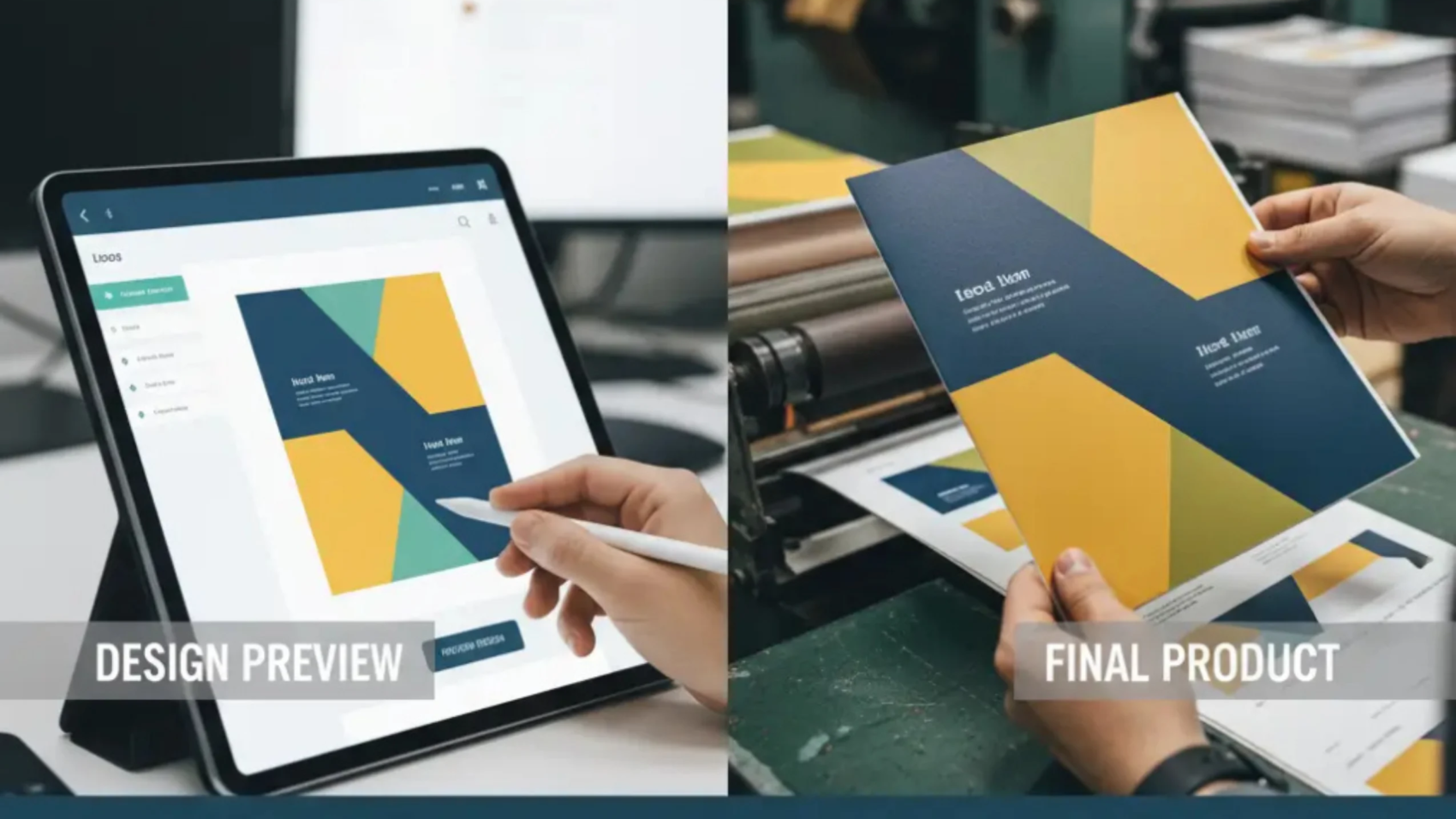
build customer trust in web-to-print from design preview to final product

To build customer trust in web-to-print, print businesses must focus on transparency, accuracy, and consistent communication at every stage of the ordering journey. When customers feel confident in previews, approvals, and delivery expectations, they are far more likely to return and recommend your platform.

  • Unlike off-the-shelf products, custom prints are highly personal – mistakes mean disappointment, lost time, and ruined loyalty.
  • 82% of online shoppers say they won’t reorder after a bad custom product experience, even if the mistake gets fixed later.
  • Positive trust triggers (accurate previews, clear communication, secure payment, quality delivery) drive reviews, referrals, and long-term value.

Trust-Builders Every Great Print Business Needs

1. Accurate, Live Design Previews That Build Customer Trust in Web-to-Print

Show customers a high-fidelity, to-scale preview (2D or 3D) of their design – on the actual product, in correct colors, and perspectives. Let them rotate, zoom, or view side-by-side with real photos.

Order management tools such as Quickorders help ensure design data flows accurately from customer preview to production, reducing manual errors and increasing customer confidence.

Example: PrintPoz’s live designer not only renders accurate previews but flags low-quality images, out-of-bounds text, or sizing errors before checkout.

2. Transparent Proofing and Approval

Enable easy proof download, one-click digital approvals, and saved design histories. Notify customers at each step – file received, proof ready, approval needed, order in production.

Tip: Automated, timestamped communications show you’re organized and professional.

3. Clear Production and Shipping Updates

Send proactive status emails or SMS:

  • “Your custom mug is being printed.”
  • “Orders shipped – track here”
  • “Expect delivery by TOMORROW”

Research: Businesses with automated, transparent notifications see 27% fewer “where’s my order?” queries.

4. Consistency Between Screen and Product

Use color-calibrated screens, print profile management, and quality control workflows. Address common customer worries (“Will the colors match?”) with education or guarantee policies.

Offer side-by-side examples or video confirmations – showing digital design beside the finished piece.

5. Secure, Hassle-Free Payments

Trust isn’t just about the product. Secure payment gateways, easy refunds, and data privacy options reduce last-minute cart abandonment.


Handling Issues With Transparency

How you respond to mistakes plays a major role in how customers perceive your brand, and it directly impacts long-term trust in your web-to-print experience.

Mistakes happen – even in the best-run shops. Customers will trust you more if you:

  • Respond quickly and honestly (“We see the issue, here’s how we’ll fix it.”)
  • Offer proactive solutions (free reprint, refund, or discount)
  • Collect and share success stories or testimonials from customers whose problems were resolved to their satisfaction.

Trust-Boosting PrintPoz Features

  • Design-to-product preview: Live 3D and high-res 2D product mockups
  • Automated proofing and approval workflows: Instant feedback and order status flows
  • Order tracking: Always up-to-date, customer-facing dashboards
  • Quality assurance: Built-in image validation, color profile enforcement, and customer communication queue

Platforms like PrintPoz are designed to help print businesses build customer trust through accurate design previews, automated proofing, transparent order tracking, and built-in quality checks across the entire web-to-print workflow.

See PrintPoz’s workflow in action – designed from the ground up for transparency, predictability, and customer confidence.


Tips for Building (and Keeping) Customer Trust

  • Regularly review and update your onboarding, proofing, and communication workflow.s
  • Display “what you see is what you get” assurances, certificates (if any), and trusted payment badges.
  • Showcase unfiltered customer reviews and visual testimonials directly on the product page.s
  • Encourage feedback after every order – then act on it to keep improving.ng

Conclusion: Trust – Your Greatest Print Business Asset

Businesses that consistently earn customer trust across their web-to-print workflows create stronger relationships, higher lifetime value, and long-term competitive advantage.

No level of automation, product variety, or even price can match the business power of trust. As you scale your print shop or online platform, keep customer confidence at the heart of every step – from the first preview to the moment your product lands in their hands. Loyal, trusting customers are the ones who return and refer, fueling your long-term success.